

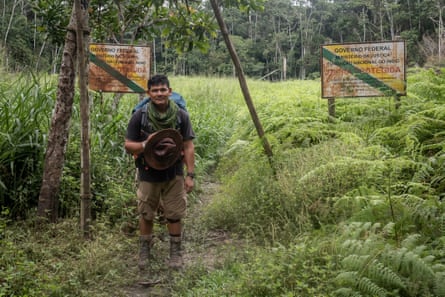
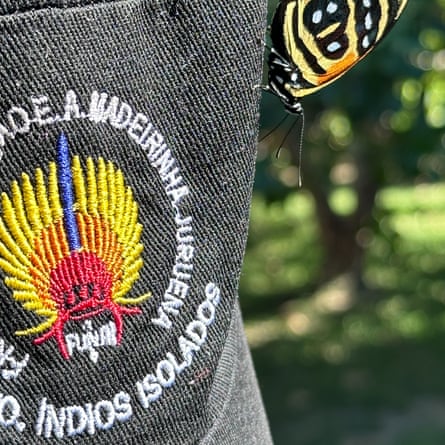
In recent times, agents from the national agency for tribal groups traveled over 100 kilometers through lush Amazon jungle on the southern periphery of the Amazon basin. Their task was to observe and assist in defending an Indigenous group with little to no interaction with the modern world.
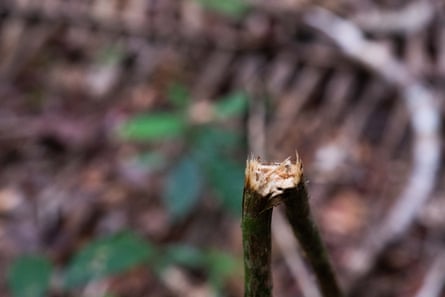
Their observations included a handcrafted item made from leaves, a child’s footprints by a stream, and logs newly opened to extract honey. They also found former dwellings slowly decaying and remnants of foraged food near old fire pits. These were all undeniable evidence that the Kawahiva people continued to inhabit the region.
Administrative Stalling Impede Constitutional Protection
Despite a judicial directive approving a safeguarding strategy for the isolated community, the Brazilian government has not followed through. The court-ordered plan included accelerating the demarcation of their territory and detailing forest protection strategies.
Red tape, financial shortfalls, and hostile clashes—including attacks by figures linked to the deforestation business—have halted the protection initiative.
Without established perimeters, deforestation agents continue to encroach, leaving the Kawahiva extremely vulnerable of genocide. Indigenous supporters label the stalling a deliberate and dangerous breach of the national charter.
“The inaction in demarcation is not only against the law, it is also extremely dangerous.”
Shrinking Wilderness
The proposed one-million-acre Indigenous land has yet to receive official demarcation, as mandated by law. It is considered the biggest undefended woodland in Brazil that is the domain of uncontacted Indigenous people.
Just outside the territorial limits, the scene changes dramatically. The vegetation is cleared for ranching. Property markers are being erected, and new roads are pushing further into the pristine forest.
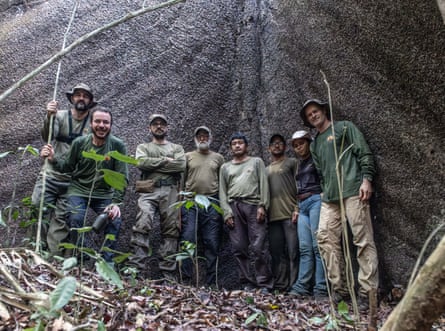
Following the expedition, a director for land defense pledged to finalize the demarcation. “We are employing everything in our power to ensure that the Kawahiva land is demarcated,” the official stated.
Financial Obstacles and Escalating Tensions
Physical demarcation of the 320-kilometer border involves installing boundary posts. This is seen as a key measure to show loggers and farmers that the government is serious about protection. However, the demarcation is delayed.
Financial resources has been a primary obstacle. Initial plans to use environmental mitigation money from a infrastructure development were unsuccessful. The agency has since sought other sources.
It has now engaged a technical academic body. “This is a collaborative effort that we’ve already had success with,” explained an official. “The fieldwork is projected to begin in the first part of 2026.”
The institute stated that discussions were in late stages but did not provide a timeline.
Complicating everything is what officials term a “highly tense environment in the region,” which is expected to require an armed police presence during any field operations.
Hostile Actors
The potential for conflict is real. In 2018, an armed group assaulted a monitoring outpost in the territory, resulting in a violent clash where one attacker was killed. During a subsequent visit, national force officers were stationed in the area.
Earlier this year, an audio recording surfaced in which a man, identifying as a local leader, made threats against the lead field agent. The individual, linked to local loggers, claimed to have entered the territory “trying to find those isolated Indians.”
He is reportedly facing several illegal activities, including charges related to the violent assault on the agent. “We can’t work because of this guy,” the man said in the recording.
The Political Clock
Anthropologists and experts point out that it has been over 25 years since the existence of the uncontacted people was confirmed. “Throughout this time, land-grabbers have sought to overturn the territorial status in court,” noted one expert.
They raise a disturbing possibility: that the present holdup is a deliberate political tactic rather than a procedural one. This leads to concern that demarcation may not happen even in the coming year.
The political context adds urgency. Many believe that the current term represents the closing window for this demarcation effort to be completed, before a potential political shift could halt all Indigenous land demarcation, as occurred in the past.
The legal ruling was the result of a petition filed by a tribal rights group. The court recognized the “threat of elimination, food insecurity, and acculturation” facing the community.
A lawyer involved described the process as “stalled,” with the court awaiting compliance. The risks of inaction are stark. “It is also highly risky and threatens the survival of the vulnerable tribe,” warned a representative from an campaigning body.

